Friday, December 4, 2009

Food Force: Games Trying to Make a Difference


As we all know, poverty, famine and HIV/AIDS are major issues in third-world countries today. But what can individuals do to help mitigate that? Well, there are the obvious things; give money to charity, donate food to a food bank, et cetera. But if you yourself don't have the resources to do these things, there is one thing you can do: learn. Not in the most general of senses; rather, learn about the problems in third-world countries, and what the UN and other groups are trying to do to fix the problem.

Introduce Food Force: a free, downloadable game made available by the UN. The game is aimed soley at teaching people about the problems in third-world countries by attempting to integrate the player into a fictional relief mission. The game consists of six parts: air surveillance, creating energy pacs, an air drop, a locate and dispatch mission, food run, and future farming. The game is playable in about an hour or so; however, the game does have a global rating system, and high scores are recorded, so that heightens its replayability some (and it's a clever attempt at ingraining these thoughts into the players).

Let it be noted that this game is fully and solely intended for educational purposes; I myself remember playing this game in school. This is not to say that the game isn't fun; rather, the UN sacrificed entertainment value for educational value. This is not a bad thing at all. The UN is appealing to an ever-expanding audience in an attempt to get their point across, and, quite frankly, it's a clever way of doing so. Bravo, UN. Bravo.

Monday, November 30, 2009

Knock McDonald's Down a Notch


Hate McDonald's? Like flash games? Well, then, this game is for you! Welcome to the McDonald's Game, where you take on the role of CEO of a McDonald's and try to earn as much money as humanly possible...or, alternatively, drive it into the ground!

As you can see from the picture, Ronald McDonald is not a happy camper. Why? Because this game is a blatant and obvious attempt at exposing the moral and environmental issues of the franchise, and they do it through a very successful means: humour. The game consists of tearing down rainforests to build soy fields and pastures to raise cows who will eat said soy (you can even genetically modify the soy for "added effects!"). You then move to the slaughterhouse, where the cows are fattened up before being placed into a grinder to be made into patties. Oh, and don't forgot to use your trusty flamethrower on those sick cows, who could land you with a food poisoning lawsuit!

Then you move to managing a McDonald's store. Make sure you hire enough employees to keep up with demand. Oh, and make sure your employees are smiling. If they're not, give them a badge that doesn't mean anything. If that fails, reprimand them for not showing their pearly whites. And if all else fails, fire them! There's plenty of people more than happy enough to take their place!

On top of all this, you need to keep up with all the PR issues that come with a big corporation. Treehuggers complaining about you tearing down those rainforests for your soy fields? Bribe an environmentalist to put out all the good things that come from tearing down that rainforest. Got complaints about your fattening, obesity-causing food? Inform them of the food pyramid, and explain how your burgers fit into it...somewhere.

How does McDonald's feel about this game? They're definitely not a fan. Then again, since when has McDonald's been a fan of anything that puts them in anything except a shining light? Anyway, check it out. Aside from the game, there is additional information at the top of the site; read through it if you're anti-McDonald's. You'll be lovin' it.

http://www.mcvideogame.com/

Wednesday, November 25, 2009

Reasonable or Oversensitive?


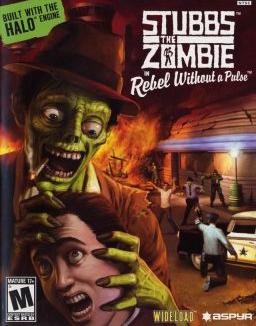
While not recent games, I figured I'd bring up an issue I came across recently. Two games, "Stubbs the Zombie in Rebel Without a Pulse" and "F.E.A.R" were criticized for portraying "cannibalism" in their games. The criticism of F.E.A.R's "cannibalism" is far less publicised, so I will instead focus on Stubbs the Zombie.
The gameplay of Stubbs the Zombie consists of, not surprisingly, killing humans for their brains and turning them into zombies. Not too different from zombie movies that show zombies eating brains or full people, right? Well, apparently, putting it into a video game is far more harmful to children's brains than that (it should be noted that this game is rated M, meaning one must be 18 to purchase the game). Why is it more harmful to children than zombie movies? I couldn't find any of the critic's reasoning behind it. I did, however, find a quote from the game's publisher, Wideload Games, which is a response to the cannibalism claims:
"The current kerfuffle in the US media about Stubbs the Zombie can be summed up in one word: semantics.
Stubbs, they say, is a cannibal.
This is nonsense, as anyone with a working knowledge of cannibals can tell you. Stubbs fails all the classic litmus tests for cannibalism. He does not wear a bone through his nose. He does not help FBI agents track down serial killers. He has not written a cookbook. He is not named Jeffrey Dahmer. The list goes on and on.
Stubbs is a zombie. Thus the title "Stubbs the Zombie." Zombies eat brains. That's what they do. Stubbs cannot just saunter into the cafeteria and order a plate of Freedom Fries. He has to fight for his meals. In fact, actual cannibals only make it harder for Stubbs to eat, which is why this "cannibalism" story is insulting as well as injurious.
It's no surprise that the all-human media cartel resorts to distortions and name-calling; their anti-zombie bias has been evident for decades, and Stubbs is just the newest target."
While there is definite humour in the response, it is also a legitimate response to the accusations. What, exactly, did they expect gameplay with the player controlling a zombie to entail? Some critics who used the cannibalism argument also praised the game itself. They said the "squishy, scalp-munching sound effects" actually contributed to the game's overall quality. So, then...why was the "cannibalism" such a big deal? Answer: it's not. The gameplay does not even focus on the violence; it was a game made with humour in mind.
So...were the critics being reasonable? Were children who got their hands on the game going to go out and start eating stranger's brains because they saw a zombie in a top hat and suit do it? Or were they just overreacting to the point of only getting a semi-serious response from the publishers back? You decide.

Friday, October 23, 2009

Study on Video Games and Violence


This article on the effects of video game violence on the psyche of players is, I admit, very convincing. With plenty of references to scientific studies done and the names of many doctors and PhD's attached to these studies, it is hard to deny that violence in video games do indeed seem to increase the aggression level in their players. The article is by no means a hard read; it is very casual and seems to give the sense that a gamer has written this article, rather than a scientist who has never played a video game in his life.

However, this article does suffer from a few flaws. As mentioned above, it almost seems like a gamer has written the article, which can actually hurt its credibility, due to possible bias. The article also makes some erroneous assumptions; they credit the Columbine shootings to violent video games, which cannot be proven (despite what many people tend to think). As always, take this article with a grain of salt, and consider yourself either more aware of the opposite argument, or more justified in your own.

IGN: The Source for (Only Slightly Biased) Reviews

IGN is perhaps one of the largest and well-known sites for video game news, reviews, cheats, guides, etc. They also pay some mind to television and movies, though video games are their first and foremost concern.

This site is an excellent source of reviews (not so much news; whenever news is posted, it tends to be superficial and related to pop culture more than anything), and I recommend it for those who are looking for that kind of thing. I should warn, however, that IGN is slightly biased in their reviews; they fall into the "big, macho man gaming" trap, tending to favour sports games and action games with plenty of explosions and nearly-naked women over role-playing and alternative games. Regardless, still a solid recommendation.

What Can Video Games Do For You?

Video games, despite all their criticism, are able to offer advantages and benefits to those who play them (in moderation, of course!). This article outlines, briefly, some of the advantages that playing video games can provide. This article was found on short notice, so forgive the shortness of it.

Jack Thompson - The Epitome of Video Game Activism

Jack Thompson, the recently disbarred Florida attorney well-known for his campaigns against video games such as Grand Theft Auto and Manhunt is quite possibly the most prolific anti-video game activist. While he does seem a little extreme, in the interest of fairness, this link will provide a glimpse into his side of the argument.